WELCOME. Take a moment to kick off your shoes, relax, and refill your cup. Enjoy some poetry and a bit of art. Browse through the assorted offerings, and hopefully you'll find something helpful, informative, or just fun. Oh, And chocolate!
Showing posts with label economics. Show all posts
Showing posts with label economics. Show all posts
Tuesday, December 11, 2012


Wednesday, April 13, 2011
QUOTE OF THE DAY
Cripples in states like Texas and Wisconsin and Kansas are fighting like hell to stop the funds that pay their assistants from being cut off. Governors are instead giving tax breaks to the mega-rich so that they will create more jobs. We all know this is true. When the mega-rich get to keep more of their money they throw bigger and better parties, which creates more jobs for cocaine dealers and prostitutes.

LET us HELP
Mike Ervin,
AKA
CONTINUE GETTING OUT OF BED,
Shall We.
Tuesday, April 12, 2011
IT'S A STIGLITZ KIND OF DAY
 The top 1 percent have the best houses, the best educations, the best
doctors, and the best lifestyles, but there is one thing that money
doesn’t seem to have bought: an understanding that their fate is bound
up with how the other 99 percent live. Throughout history, this is
something that the top 1 percent eventually do learn. Too late.
The top 1 percent have the best houses, the best educations, the best
doctors, and the best lifestyles, but there is one thing that money
doesn’t seem to have bought: an understanding that their fate is bound
up with how the other 99 percent live. Throughout history, this is
something that the top 1 percent eventually do learn. Too late.
- by Joseph E. Stiglitz, Vanity Fair.

Do you know we could eliminate half the predicted shortfall in the national budget by simply failing to renew
the Bush tax cuts? Do you know that if corporations were taxed at a
fair rate, much of the rest could be found? General Electric recently
reported it paid no current taxes. Why do you think that was?
Why do middle and lower class Tea Party members not understand that they bear an unfair burden of taxes that should be more fairly distributed? Why do they support those who campaign against unions and a higher minimum wage? What do they think is in it for them?

Wednesday, March 23, 2011
APPLIED ECONOMIC THEORY & URINAL CAKES
Dear Economist,
Whenever I go to the gentlemen’s toilet in a pub, I’m unsure how to behave. The question is: Should I urinate on the urinal cakes or not? At first, I think that if I urinate on them I’ll help to finish them earlier, thus making the publican purchase more of them, and helping the economy.
But then I think, while I’m urinating, that if the publican has to buy more tablets, eventually he will probably have to raise the price of the beer, to my huge disappointment. So the question is, where should I urinate in the gentlemen’s toilets in the pub?
Thank you,
Massimo J.
Italy
READ THE RESPONSE HERE.
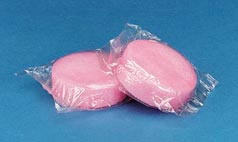
I confess, I found this on Andrew Sullivan's site, The Daily Dish.
For more on the analogy try: Frederic Bastiat.
QUOTE OF THE DAY
"The whole of economics can be reduced to a single lesson, and that lesson can be reduced to a single sentence.
The art of economics consists in looking not merely at the immediate but the longer effects of any act or policy; it consists in tracing the consequences of that policy not merely for one group but for all groups."
The art of economics consists in looking not merely at the immediate but the longer effects of any act or policy; it consists in tracing the consequences of that policy not merely for one group but for all groups."
-- Henry Hazlitt in Economics in One Lesson.
Subscribe to:
Posts (Atom)