Showing posts with label June. Show all posts

Wednesday, June 18, 2014

June

 
Gazed upon the glorious sky
And the green mountains round,
And thought that when I came to lie
At rest within the ground,
'T were pleasant, that in flowery June,
When brooks send up a cheerful tune,
And groves a joyous sound,
The sexton's hand, my grave to make,
The rich, green mountain-turf should break.

A cell within the frozen mould,
A coffin borne through sleet,
And icy clods above it rolled,
While fierce the tempests beat--
Away!--I will not think of these--
Blue be the sky and soft the breeze,
Earth green beneath the feet,
And be the damp mould gently pressed
Into my narrow place of rest.

There through the long, long summer hours
The golden light should lie,
And thick young herbs and groups of flowers
Stand in their beauty by.
The oriole should build and tell
His love-tale close beside my cell;
The idle butterfly
Should rest him there, and there be heard
The housewife bee and humming-bird.

And what if cheerful shouts at noon
Come, from the village sent,
Or song of maids, beneath the moon
With fairy laughter blent?
And what if, in the evening light,
Betrothèd lovers walk in sight
Of my low monument?
I would the lovely scene around
Might know no sadder sight nor sound.

I know that I no more should see
The season's glorious show,
Nor would its brightness shine for me,
Nor its wild music flow;
But if, around my place of sleep,
The friends I love should come to weep,
They might not haste to go.
Soft airs, and song, and light, and bloom
Should keep them lingering by my tomb.

These to their softened hearts should bear
The thought of what has been,
And speak of one who cannot share
The gladness of the scene;
Whose part, in all the pomp that fills
The circuit of the summer hills,
Is that his grave is green;
And deeply would their hearts rejoice
To hear again his living voice.

Sunday, September 1, 2013

Featured Poet - E. E. Cummings


A couple of quotes: 

To be nobody but yourself in a world which is doing its best, night and day, to make you everybody else means to fight the hardest battle which any human being can fight; and never stop fighting. 

The most wasted of all days is one without laughter.


I had a high school English teacher who despised E. E. Cummings. She believed his approach to poetry was akin to an evil that was sending us careening into the bowels of hell.  His unconventional use of capitalization, spacing, and punctuation drove her to red faced tirades. 

Why she chose to teach a poet she hated so much, I don't know.  But I knew at the time that I was unable to share her opinion. I also knew that it was unwise to say so. What I didn't know was that I was the one in the majority, not her.    

Cummings' use of capitalization (or lack thereof) was the focus of a fair amount of controversy, but contrary to popular belief he did not eschew them entirely.  His signature for example, was signed using capital letters.  

"I am a small eye poet," he wrote to his mother by way of explanation. He used lower case letters to separate the poet from the poem, a unique way to solve a problem that still seems to plague most poets, the assumption that each poem is a small autobiography.

He was an accomplished writer in prose as well in poetry, and his intelligent, straightforward manner of expression brought him a great deal of respect. But did you know that he was also an artist? In fact, he considered himself as much a painter as a poet. Before he became disillusioned with the artistic establishment he garnered much acclaim as an American cubist and an abstract, avaunt garde painter. 

Unfortunately, not all of Cummings' efforts were as successful. His attempts to add his voice to the dialog on bigotry and racism were misunderstood. He fell into a pitfall that is common today, using the hurtful and controversial words while expecting his unspoken intent to be apparent. Also, surprisingly, this bohemian, avaunt garde writer and artist was a republican and an ardent supporter of Joseph McCarthy. 

When I think of E. E. Cummings, however, I think of poems like these: 


[i carry your heart with me(i carry it in]

i carry your heart with me(i carry it in
my heart)i am never without it(anywhere
i go you go,my dear;and whatever is done
by only me is your doing,my darling)
                                                      i fear
no fate(for you are my fate,my sweet)i want
no world(for beautiful you are my world,my true)
and it’s you are whatever a moon has always meant
and whatever a sun will always sing is you
here is the deepest secret nobody knows
(here is the root of the root and the bud of the bud
and the sky of the sky of a tree called life;which grows
higher than soul can hope or mind can hide)
and this is the wonder that's keeping the stars apart
i carry your heart(i carry it in my heart)
 

[i like my body when it is with your]

i like my body when it is with your
body. It is so quite new a thing.
Muscles better and nerves more.
i like your body.  i like what it does,
i like its hows.  i like to feel the spine
of your body and its bones,and the trembling
-firm-smooth ness and which i will
again and again and again
kiss, i like kissing this and that of you,
i like, slowly stroking the,shocking fuzz
of your electric furr, and what-is-it comes
over parting flesh….And eyes big love-crumbs,

and possibly i like the thrill

of under me you so quite new

 
from: Complete Poems: 1904-1962, Copyright 1991. 
Sources: sketch: self-portrait,   NOT "e. e. cummings" by Norman Friedman, The Paintings of E. E. Cummings (Painting: Nude Trio Two cavorting, one reclining) Ken Lopez Bookseller, Yes, I went to Wikipedia.
 

Saturday, June 29, 2013

Party in the Bronx!


My new goal is to feature one poet each month. I made this decision just a few days ago, and as it is already the end of June, the pressure was on. 

If you happen to be in New York today stop in and check it out: 

As part of the 2013 PSA National Series, Yet Do I Marvel: Black Iconic Poets of the 20th Century, and on the occasion of the publication by Library of America of Countee Cullen: Collected Poems, the Poetry Society of America has teamed with the Woodlawn Conservancy to pay tribute to this iconic black poet. Steps away from Cullen's own burial site, Collected editor Major Jackson and poets Rowan Ricardo Phillips and Robin Coste Lewis will read poems in tribute to Cullen; With musical performances by the stunning mezzo-soprano Alicia Hall Moran joined by guitarist Brandon Ross.
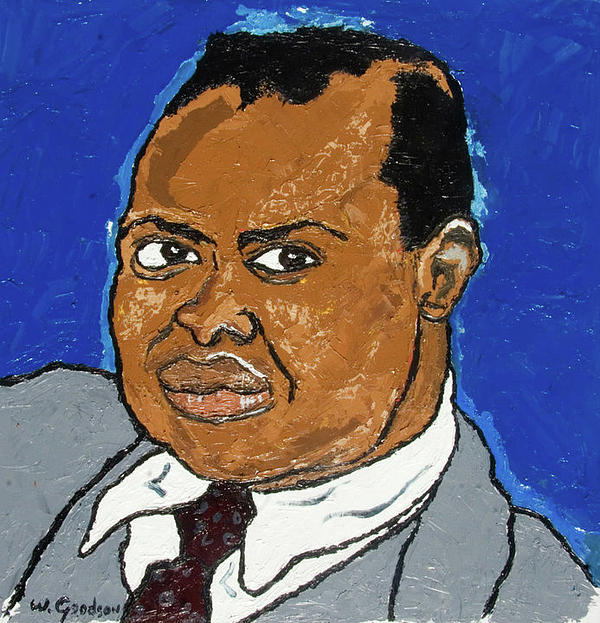
(The picture I chose isn't a great one quality wise, but it has the best and most beautiful smile of all the available choices.)


After being eclipsed for many years after his death by the work of of other Harlem Renaissance writers, like Langston Hughes and Zora Neale Hurston, Countee Cullen's beautiful work is experiencing a resurgence.

Poet, anthologist, novelist, translator, children's writer, playwright, and mystery man, he was born March 30, 1903 ... somewhere. (There are conflicting stories about his birthplace that he chose never to clear up.) He was adopted by the Reverend Frederick A. and Carolyn Belle (Mitchell) Cullen. ... probably. Again, the story is murky.

He was close to his adopted father, a Christian minister, and there is some evidence that he was homosexual, ... but again, nothing is certain. His marriage to Yolande Du Bois, was disastrous and ended quickly, and he remarried a year later. Rumor has it that he was in love with a young man named Harold Jackman.

Cullen graduated Phi Beta Kappa from NYU, and earned a masters degree in English and French from Harvard. He wrote noteworthy, even significant work in a number of genres, won many literary prizes, and was one of the most popular black literary figures of his generation - Harlem Renaissance.

Cullen was shaped by both his exposure to black ideas and yearnings, and his mostly white formal education and it heavily influenced his creative work. His work was in the vein of Keats and Shelly with a nod to A. E. Houseman, and he believed that art could transcended race and be used as a vehicle to minimize the distance between black and white peoples.

Yet Do I Marvel
I doubt not God is good, well-meaning, kind,
And did He stoop to quibble could tell why
The little buried mole continues blind,   
Why flesh that mirrors Him must some day die,
Make plain the reason tortured Tantalus
Is baited by the fickle fruit, declare   
If merely brute caprice dooms Sisyphus
To struggle up a never-ending stair.   
Inscrutable His ways are, and immune   
To catechism by a mind too strewn   
With petty cares to slightly understand   
What awful brain compels His awful hand.   
Yet do I marvel at this curious thing:   
To make a poet black, and bid him sing!

from: Color. Copyright 1925. 


To Certain Critics
Then call me traitor if you must,   
Shout treason and default!
Say I betray a sacred trust
Aching beyond this vault.
I’ll bear your censure as your praise,   
For never shall the clan
Confine my singing to its ways
Beyond the ways of man.

No racial option narrows grief,
Pain is no patriot,
And sorrow plaits her dismal leaf   
For all as lief as not.
With blind sheep groping every hill,   
Searching an oriflamme,
How shall the shepherd heart then thrill   
To only the darker lamb?

A Brown Girl Dead

With two white roses on her breasts,
   White candles at head and feet,   
Dark Madonna of the grave she rests;
   Lord Death has found her sweet.

Her mother pawned her wedding ring   
   To lay her out in white;
She’d be so proud she’d dance and sing   
   To see herself tonight.

from: My Soul's High Song: The Collected Writings of Countee Cullen. Copyright 1991.


He has quite a Bibliography:

Countee Cullen Painting Poetry collections: Color, Copper Sun, Harlem Wine, The Ballad of the Brown Girl, The Black Christ and Other Poems

Prose: One way to heaven, Any Human to Another, The Medea and Some Other Poems, On These I Stand: An Anthology of the Best Poems of Countee Cullen, My Soul's High Song: The Collected Writings of Countee Cullen, Countee Cullen: Collected Poems, One Way to Heaven, The Lost Zoo, My Lives and How I Lost Them

Drama: St. Louis Woman

Beautiful painting by Warren Goodson.

Sources: here, here, & here.